KRITIS-Dachgesetz
§ 13, in force 17 Mar 2026 |
Operators of critical facilities must take appropriate resilience measures and provide adequate physical protection of facilities and grounds; registration with the BBK by 17 July 2026, then risk assessment and implementation on a fixed schedule. |
The buyer of tier one is not a defence customer. It is a compliance officer with a deadline and a budget, and the product must be procurable and installable as plant security. |
Air Security Act
2nd amendment, 6 Mar 2026 |
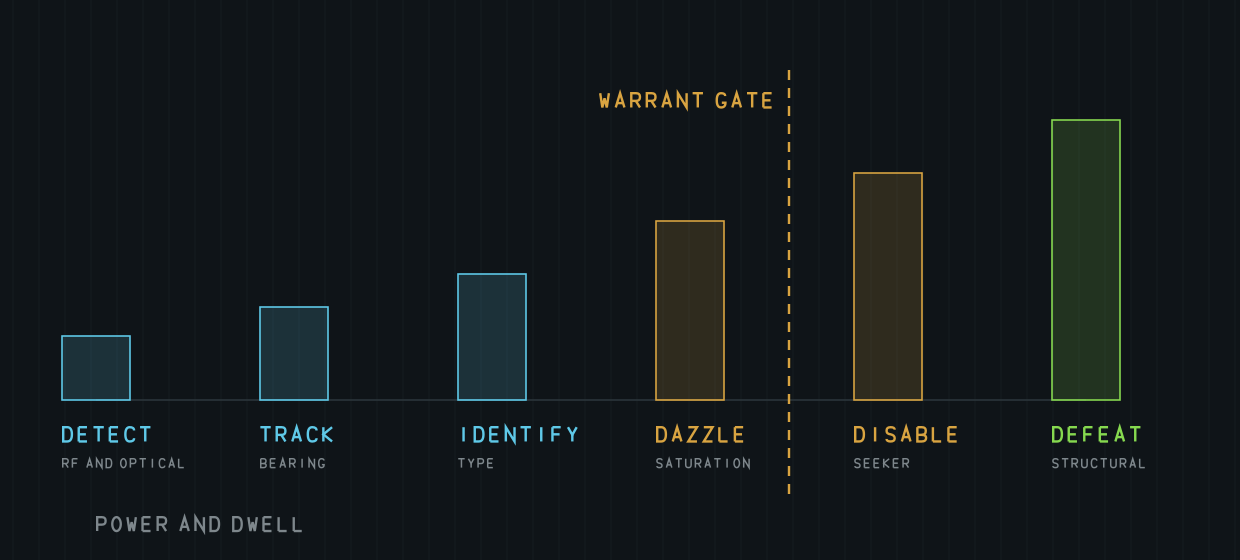
Private parties may not intercept, jam or destroy drones. The detection layer is open to operators and service providers; the effect layer remains reserved to the state. |
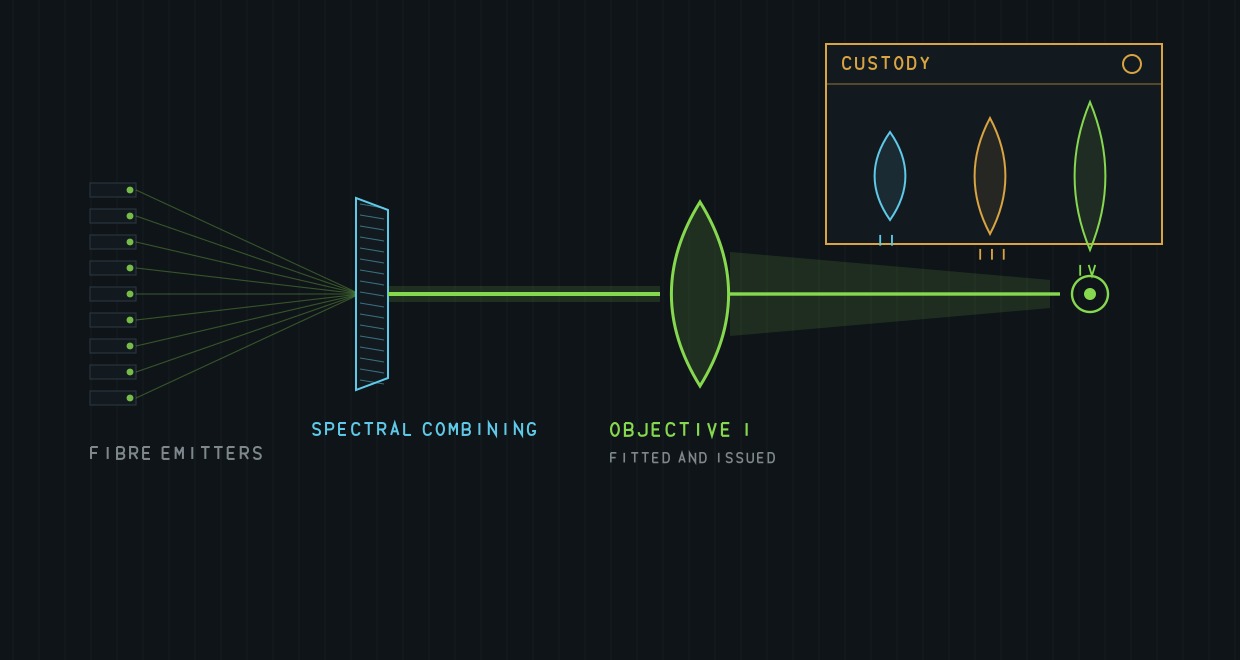
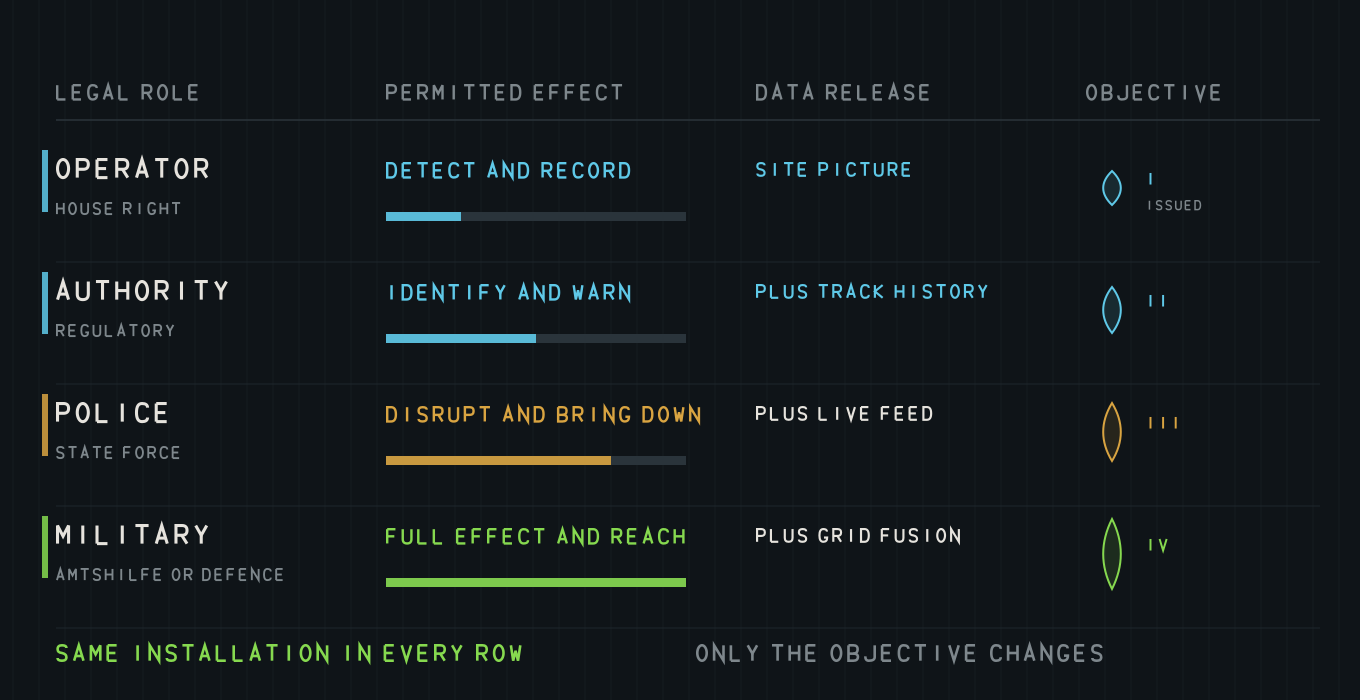
Tier one must be provably incapable of effect while installed under house right. This is why the gate is an optic and not a permission flag: with objective I fitted the installation cannot reach an effect tier by construction, and a supervisory authority verifies that by looking at the part rather than auditing a configuration. Because objective I is itself issued by the regulatory authority, the operator's lawful capability is licensed, revocable and physically accounted for. |
Custody of the objective
evidentiary chain |
Every state effect must later be attributable to an authorised actor at an identifiable moment, and the scope of that authority must be reconstructable. |
Fitting an objective is a physical, logged, two-person act with a known holder and a known time. The record of who opened the safe is the same record that proves which effect tier was available — one artefact instead of a software audit trail nobody trusts. |
Federal Police powers
UZwGBw and LuftSiG |
Federal Police hold nationwide responsibility for drone detection and defence at airports; the armed forces may be requested by the states in administrative assistance, with the decision taken by the Defence Ministry. |
Two distinct state warrants, not one. The key hierarchy has to mirror the actual chain of authority, including who may delegate it and how it is revoked when the incident ends. |
CCW Protocol IV
Blinding Laser Weapons |
Prohibits the employment of laser weapons specifically designed to cause permanent blindness to unenhanced vision, and requires feasible precautions to avoid such effects from other laser systems. |
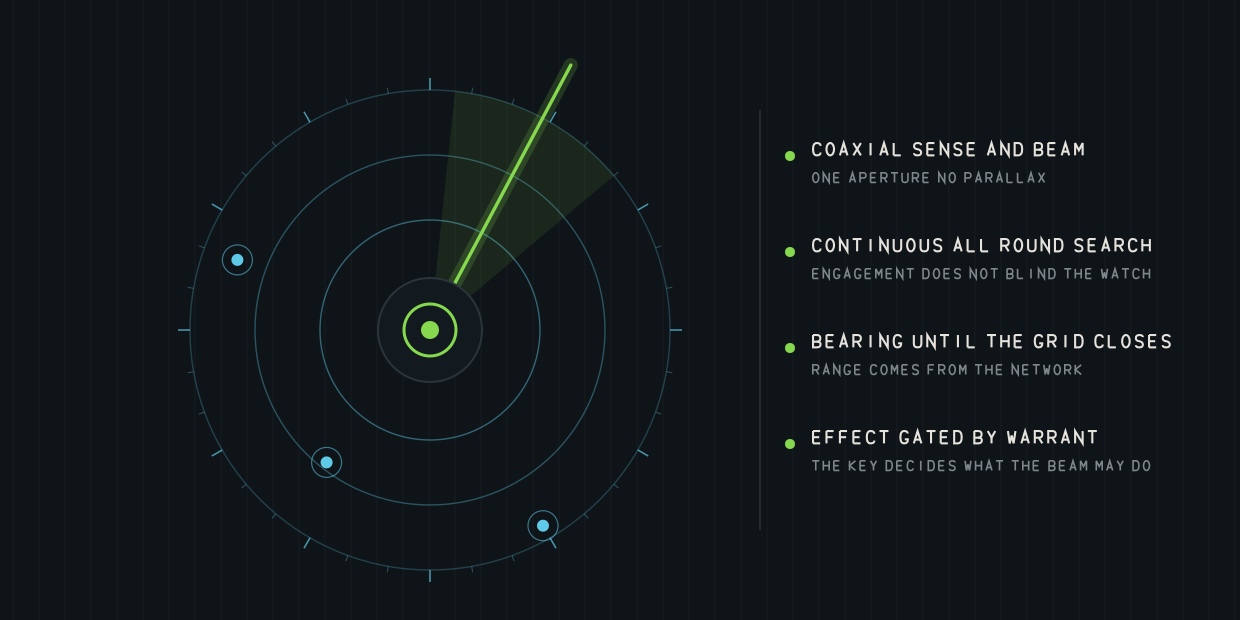
Effects are directed at unmanned aircraft only. Persons and vehicles are detected and tracked, never engaged. Beam interlocks, exclusion sectors and eye-safety design are part of the certification case, not an afterthought. |
EU AI Act (EU) 2024/1689
Art. 2(3), Recital 24, Art. 12 |
Systems placed on the market exclusively for military or national security purposes are exempt; anything also placed on the civil market is in scope. Art. 12 requires automatic event logging for high-risk systems. |
The operator tier is unambiguously a civil product and is designed to be. Signed logs of every detection, every key insertion and every effect are a requirement in both directions — regulatory and evidential. |
GDPR and state police law
data release tiers |
Optical surveillance of persons on and around a site engages data protection; onward transfer to police and armed forces requires a legal basis that differs per tier. |
Data release is bound to the same key as the effect. What an authority may see is provable after the fact, and what it may not see never leaves the site. |